Workshop Overview
With the rapid expansion of high-mobility applications, ensuring reliable communication in rapidly time-varying environments has become a critical challenge. Conventional Orthogonal Frequency Division Multiplexing (OFDM) suffers pronounced degradation in such dynamic scenarios, underscoring the urgent necessity for next-generation modulation waveforms. Consequently, emerging multicarrier schemes—including orthogonal time frequency space (OTFS), orthogonal delay division multiplexing (ODDM), orthogonal chirp division multiplexing (OCDM), affine frequency division multiplexing (AFDM), interleave frequency division multiplexing (IFDM), and random multiplexing (RM)—have provided new perspectives for robust system design.
This workshop highlights fundamental challenges in waveform design that arise at the intersection of information theory and wireless communication. By bridging theoretical limits with practical system considerations, it aims to motivate participants to address core problems in next-generation waveform research, and foster innovation across theory and practice.
Topics of Interest
We seek original completed and unpublished work. Topics of interest include, but are not limited to:
- Novel Waveform Design for Communications and Sensing
- Information-Theoretic Foundations of Novel Waveform Design
- Channel Coding and Decoding Design
- Channel Estimation and Equalization
- Signal Detection and Receiver Design for Novel Modulation Schemes
- Integrated Sensing and Communications (ISAC) with Advanced Waveforms
- Multiple Access and Resource Allocation Mechanisms for 6G Waveforms
- Low-Latency and Ultra-Reliable Transmission under High Mobility
- Joint Waveform and Coding Co-Design
- Signal Processing for Waveform-Based Transceiver Designs
- MIMO and Massive MIMO-Aided Systems
- Hardware Implementation and Prototype Validation of Novel Waveform Systems
Paper Submission and Dates
Submission will be handled via EDAS. The paper format follows the main ISIT conference guidelines.
Important Dates
| Paper Submission Deadline: | 07 April, 2026 (firm) |
| Acceptance Notification: | 21 April, 2026 |
| Final Manuscript Submission: | 28 April, 2026 |
Invited Speakers
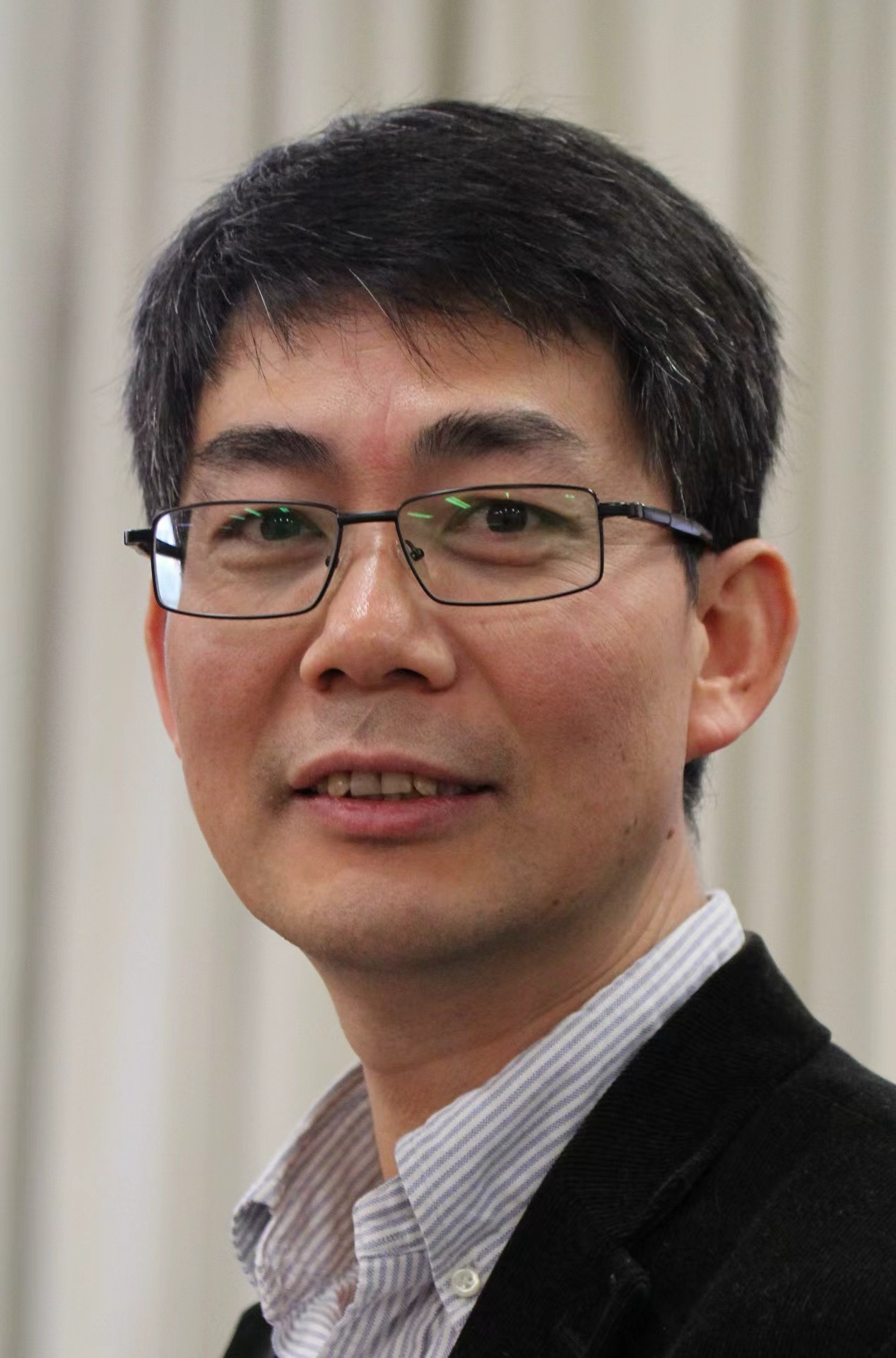

Yong Zeng, IEEE Fellow, Young Chief Professor of Southeast University and Purple Mountain Laboratory, Nanjing, China. He received the Bachelor of Engineering (First-Class Honours) and Ph.D. degrees from Nanyang Technological University (NTU), Singapore. From 2013 to 2018, he was a Research Fellow and Senior Research Fellow at the National University of Singapore (NUS). From 2018 to 2019, he was a Lecturer at the University of Sydney, Australia.
Prof. Zeng was listed as Clarivate Analytics Highly Cited Researcher for 7 consecutive years (2019-2025), AI2000 Most Influential Scholars in the field of Internet of Things for 4 consecutive years (2021-2024), Stanford "Top 2% of Scientists in the World - Lifetime Influence". Prof. Zeng is the recipient of Australia Research Council (ARC) Discovery Early Career Researcher Award (DECRA), IEEE Communications Society Asia-Pacific Outstanding Young Researcher Award, and won 10 international and domestic best paper awards including IEEE Marconi Award (2020 and 2024), Heinrich Hertz Award (2017 and 2020), etc. Prof. Zeng proposed the concept of channel knowledge map (CKM) and Delay-Doppler Alignment Modulation (DDAM) transmission method. His works have been cited by more than 38,000 times. He serves/served on the editorial board of SCI journals such as IEEE Transactions on Communications, IEEE Transactions on Mobile Computing, and IEEE Communications Letters, and leading guest editor of journals including IEEE ComMag, Wireless ComMag, China Communications, and Science China Information Sciences. Prof. Zeng was elevated to IEEE Fellow “for contributions to unmanned aerial vehicle communications and wireless power transfer”.